Run more experiments with autonomous lab robotics

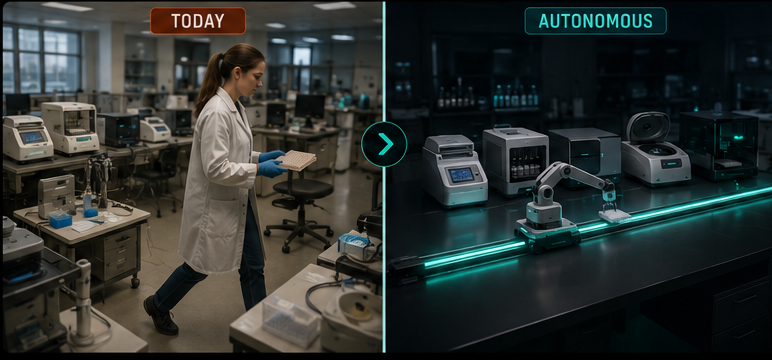
Robot on Rails uses physical-AI robotics to automate real lab workflows directly on your bench, without rebuilding your lab

About Us

Robot on Rails builds autonomous labs so you can run more experiments, designing robots that automate lab workflows, freeing scientists to focus on critical research and medical breakthroughs.

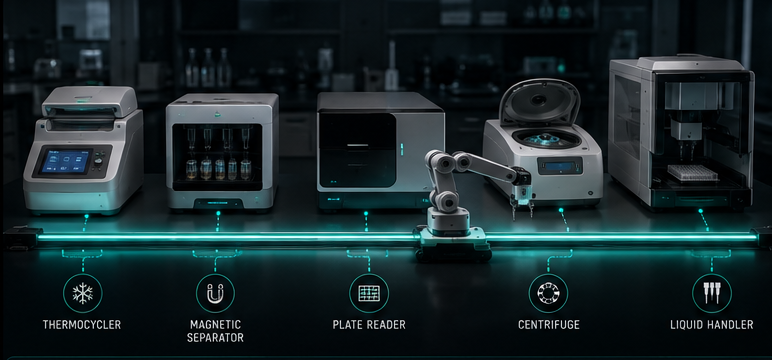
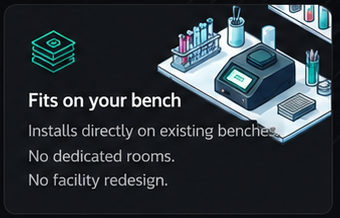
Mounted on rails, each lab robot services multiple workbenches, and adapts to your existing setup

Frequently Asked Questions

Robot on Rails builds autonomous lab robotics so teams can run more experiments without scaling headcount.

We design and deploy robotic systems that automate real lab work directly on existing benches, allowing scientists to focus on interpretation, discovery, and decision-making.

  • The Robot on Rails system automates the repetitive, hands-on steps that limit experimental throughput, such as pipetting, plate transfers, reagent handling, and routine workflow execution.
  • By removing manual bottlenecks, scientific teams can design more experiments, iterate faster, and spend more time interpreting results rather than executing procedures.
  • Engineered for production use. Integrated vision, sensing, and verification systems monitor execution in real time and detect deviations before they propagate. The architecture is designed for uptime, serviceability, and long-term operation.
  • Ongoing support. Deployments are supported by the Robot on Rails team, with maintenance, iteration, and operational support as workflows evolve.
  • No. Scientists interact with the system using plain language and structured workflow templates, not code.
  • This allows teams to modify or extend workflows without relying on automation engineers or writing scripts.
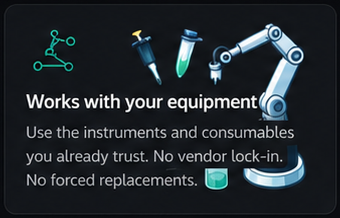
  • Yes. Robot on Rails is designed to adapt to your existing SOPs and equipment rather than requiring workflow redesign.
  • Workflows, object libraries, and execution logic are customized during deployment and can evolve over time as protocols change.
  • Increased experimental throughput: Faster iteration, reduced manual effort, and the ability to run experiments that were previously impractical.
  • Better data quality: More consistent execution and automatically captured records of how experiments were run.
  • Faster progress toward milestones: Earlier answers inform better decisions and reduce downstream risk.
  • Teams typically get started by applying to our Open Beta, which is how we deploy new systems as we expand capacity.
  • The Open Beta is open to apply and selective to accept. We review workflows, assess fit, and schedule deployments based on readiness and availability.
  • If accepted, we work directly with your team to design, install, and operate a production-grade automated workflow in your lab.

Learn more about the Open Beta →