The hidden visual checks every scientist makes — and why automation without sight fails silently.
Vision matters because lab work is full of "does this look right?" judgments that scientists make constantly without noticing — a bubble in a tip, cloudiness in a well, precipitate that's crashed out, a mis-seated plate, the wrong reagent loaded. Traditional automation is effectively blind: it runs a script and assumes the world is exactly where it expects. A system that can see catches these problems mid-run and adapts to a real, variable bench instead of demanding a perfect one.
Vision is onboard cameras plus the software to interpret them — the ability to look at the deck and answer questions like is the tip seated, is the plate in the right place, is there liquid in this well, does this reaction look normal? It's the difference between a robot that moves to coordinates and trusts that everything is correct, and one that confirms what it's actually doing.
Skilled bench scientists run a constant, mostly unconscious stream of visual checks. Automation that ignores them inherits none of that judgment. The common ones:
| What you glance at | What it tells you |
|---|---|
| Bubbles in a tip or well | Inaccurate volume or a failed aspiration |
| Cloudiness or turbidity | Contamination, growth, or precipitation |
| Crash-out / precipitate | Reagent out of spec or wrong temperature |
| Swollen or settled resin | Bead bed not ready; packing problems |
| Liquid level / meniscus | Missing reagent, over- or under-filled |
| Labware position | Mis-seated plate or wrong orientation |
Most of lab technique is just looking — and quietly correcting before anything goes wrong.
The stakes for undetected bench errors are high. Manual technique varies measurably between people, most handling failures go unseen until the readout, and the downstream cost is enormous:
Vision doesn't single-handedly fix these numbers — but they describe a bench where small, unseen execution errors quietly compound. Sight is what turns a silent failure into a caught-and-corrected event.
A blind, dead-reckoning liquid handler moves to fixed coordinates and assumes the deck is perfect — so when a tip clogs or a plate shifts a millimetre, it keeps going and produces a confident, wrong result you won't see until the data comes back. A system that can see does the opposite: it re-aspirates the clog, re-aligns the plate, and flags the wrong tube before pipetting. That same sight lets it locate labware on a real, variable bench instead of needing a fixed, calibrated deck.
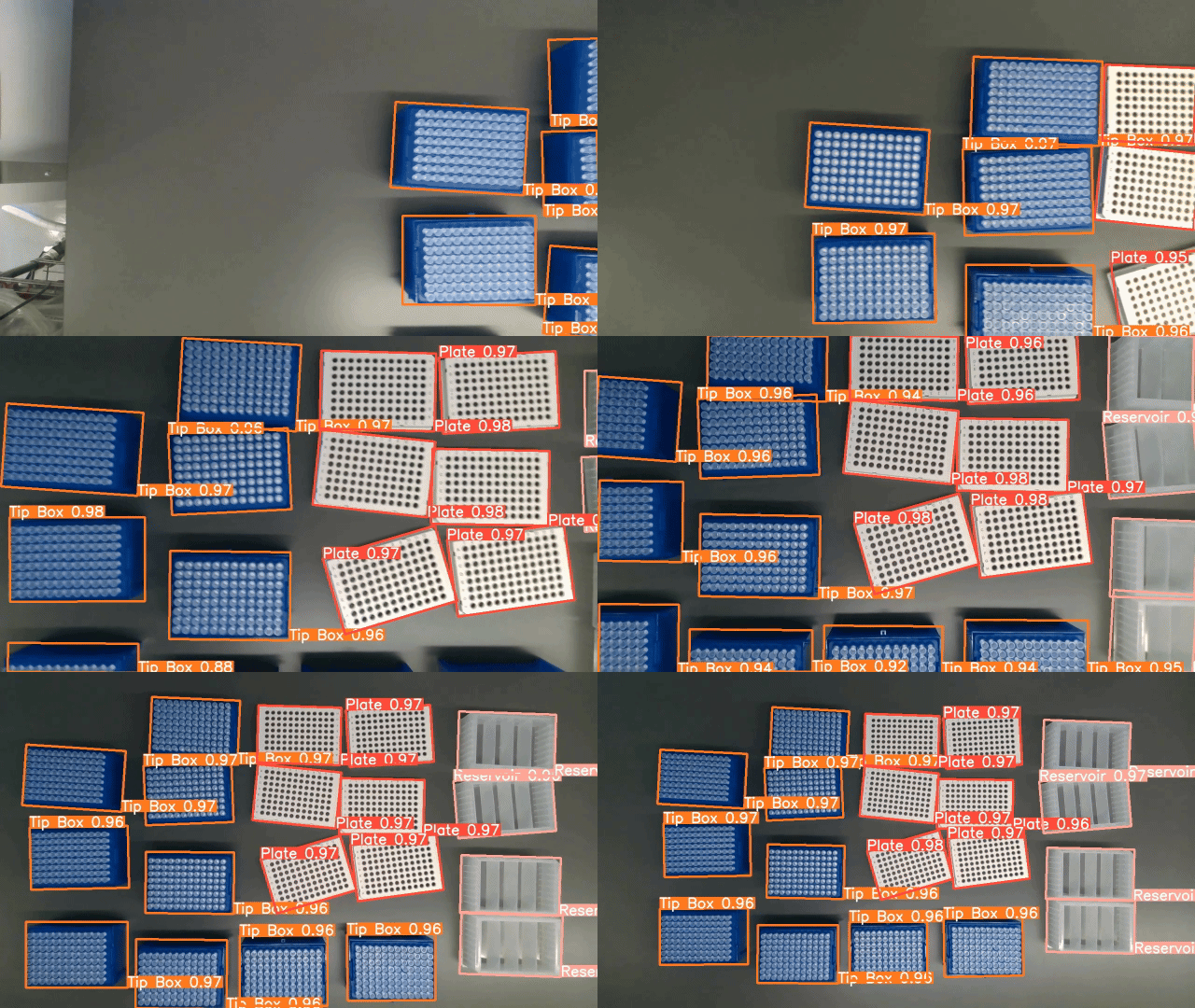
On the Undergrad, onboard cameras verify each step as it happens, so an off-spec step is caught mid-run rather than discovered in your readout. See how the vision loop works →
If a process depends on a person occasionally looking up and going "hm, that's not right," automating it without vision removes the only safeguard. The more variable or failure-prone the workflow, the more vision is the difference between automation you can leave running and automation you have to babysit.